Japanese Kanji Dictionary
Search by character, reading, or English meaning.
Results
Showing 16 of 16 results
- 蛆ソ、ショ、うじworm, grub, maggot
- 虷カン、ぼうふらworm
- 蠡レイ、ライ、リ、ラ、になworm-eaten, conch
- 蠧ト、きくいむしworm-eaten
- 蠕ゼン、ダ、ネン、ジュ、ニュcrawling of a worm
- 蠱コ、ヤ、まじ、まじこ.るrice worm, lead astray
- 蟯ギョウ、ジョウintestinal worm
- 䗪シャa kind of worm, can be used in Chinese medicine
- 肙エンa small worm, to twist, to surround, empty
- 蠲ケン、ケイ、ケ、やすでthe millipede sometimes confounded with the grow-worm, bright, clear
- 蛔カイ、ユウ、かいちゅう、はらのむしintestinal worms
- 蛕カイ、かいちゅうthe common intestinal worms, the tape-worm
- 蓬ホウ、ブ、よもぎsagebrush, wormwood, mugwort
- 䖝チュウ、むしinsects, worms
- 螙ト、きくいむしgrubs in wood, worms in books, clothes, etc, used figuratively of corrupt officials
- 艾カイ、ゲイ、もぐさ、よもぎ、おさ.めるmoxa, sagebrush, wormwood, mugwort
Kanji sets
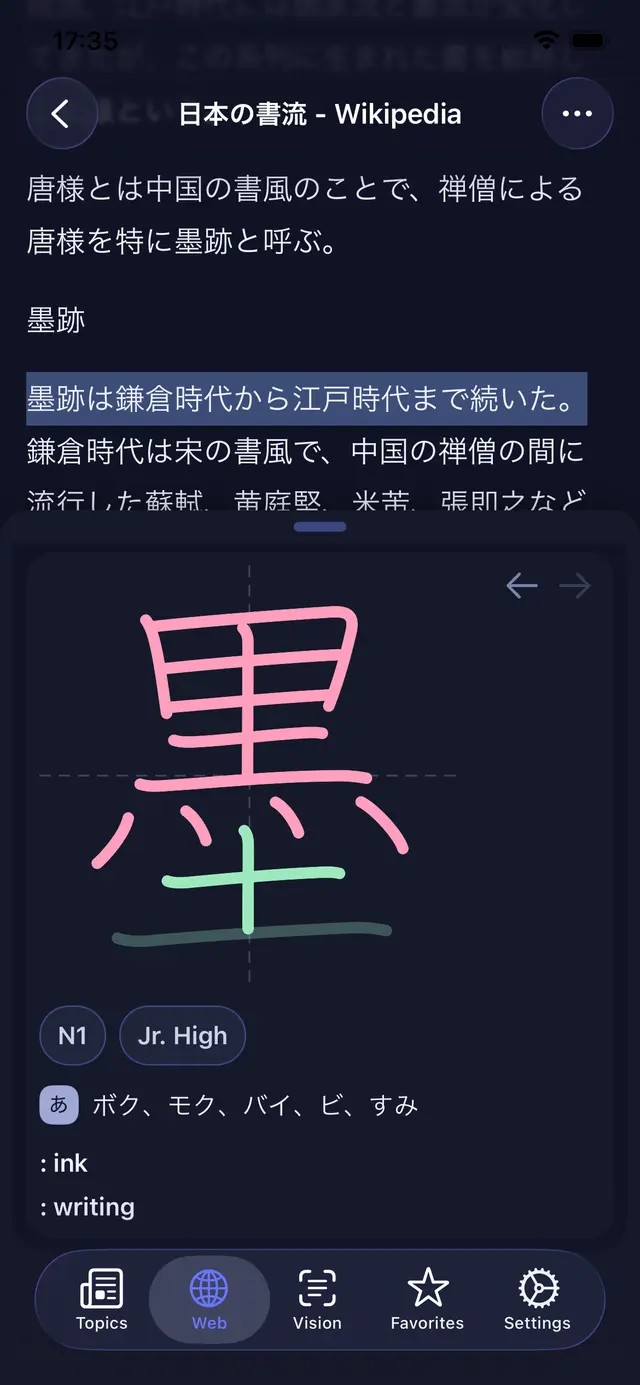
JLPT kanji
Kanji by approximate level for the Japanese Language Proficiency Test, from N5 (easiest) to N1 (hardest).
Doknya expert kanji
Kanji with no assigned JLPT level, grouped by frequency of use and writing complexity.
Kyōiku kanji
Graded kanji lists developed by the Japanese Ministry of Education.
Jinmeiyō kanji
Kanji used in Japanese names
Jinmeiyō variant kanji
Variant forms of jōyō kanji, used in Japanese names
Dictionary, classification, ordering, and stroke-order data are derived from these sources: KANJIDIC2 (CC BY-SA 4.0); Unicode Unihan (Unicode License); KanjiVG (CC BY-SA 3.0); JLPT Resources (CC BY); Kanji Usage Frequency (CC BY 4.0).