Japanese Kanji Dictionary
Search by character, reading, or English meaning.
Results
Showing 9 of 9 results
- 劌ケイ、ケ、そこ.なう、さ.く、はりto cut, injure, stab, stick on
- 柮トツto cut, a stump
- 𢦏サイto cut, wound, hurt
- 蒭シュウ、ス、スウ、まぐさto cut grass, hay, fodder
- 叧カ、ケ、わ.ける、さ.くto cut meat off away from bones, ancient torture
- 斵タク、きるto cut to pieces, to hack, to chop or hew, to carve for ornaments
- 剟テツ、テチ、タツ、タチ、けず.るto prick, to cut blocks, to engrave
- 窬ユ、トウ、ズ、くぐりどsmall door or window, hole in the wall, to cut through a wall, dig or bore hole
- 㡜セツ、セイ、セチragged clothes, left over, remainder, the excess
Kanji sets
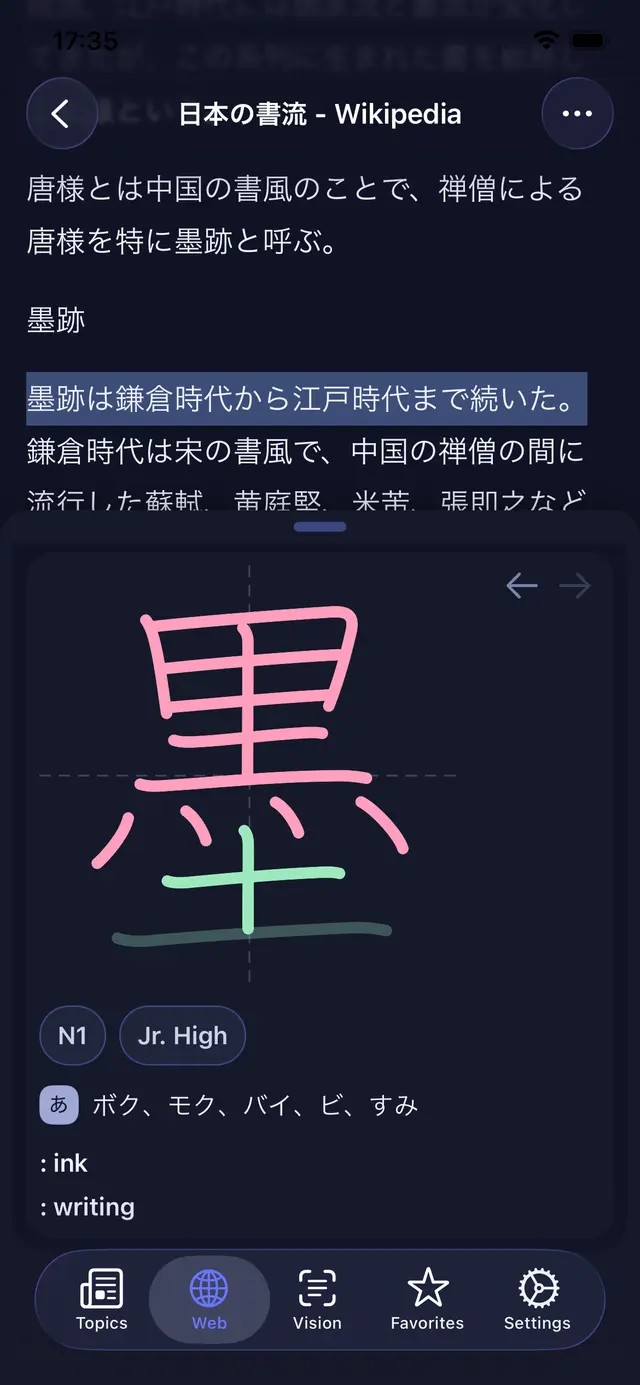
JLPT kanji
Kanji by approximate level for the Japanese Language Proficiency Test, from N5 (easiest) to N1 (hardest).
Doknya expert kanji
Kanji with no assigned JLPT level, grouped by frequency of use and writing complexity.
Kyōiku kanji
Graded kanji lists developed by the Japanese Ministry of Education.
Jinmeiyō kanji
Kanji used in Japanese names
Jinmeiyō variant kanji
Variant forms of jōyō kanji, used in Japanese names
Dictionary, classification, ordering, and stroke-order data are derived from these sources: KANJIDIC2 (CC BY-SA 4.0); Unicode Unihan (Unicode License); KanjiVG (CC BY-SA 3.0); JLPT Resources (CC BY); Kanji Usage Frequency (CC BY 4.0).