Japanese Kanji Dictionary
Search by character, reading, or English meaning.
Results
Showing 12 of 12 results
- 有ユウ、ウ、あ.る、あ、あらpossess, have, exist, happen
- 蔵ゾウ、ソウ、くら、おさ.める、かく.れるstorehouse, hide, own, have
- 具グ、そな.える、つぶさ.に、ともtool, utensil, means, possess
- 擁ヨウhug, embrace, possess, protect
- 藏ゾウ、ソウ、くら、おさ.める、かく.れるhide, own, have, possess
- 憑ヒョウ、つ.く、つか.れる、よ.る、たの.むdepend, rely, evidence, proof
- 佔チン、セン、テン、みる、うかが.うoccupy by force, usurp, possess
- 乃ナイ、ダイ、ノ、アイ、のfrom, possessive particle, whereupon, accordingly
- 據キョ、コ、よ.るto occupy, take possession of, a base
- 嘅カイ、なげ.くsound of sighing, (Cantonese) possessive
- 廼ナイ、ダイ、ノ、アイ、すなわ.ちin other words, thou, you, possessive particle
- 迺ナイ、ダイ、アイ、の、すなわ.ちin other words, thou, you, possessive particle
Kanji sets
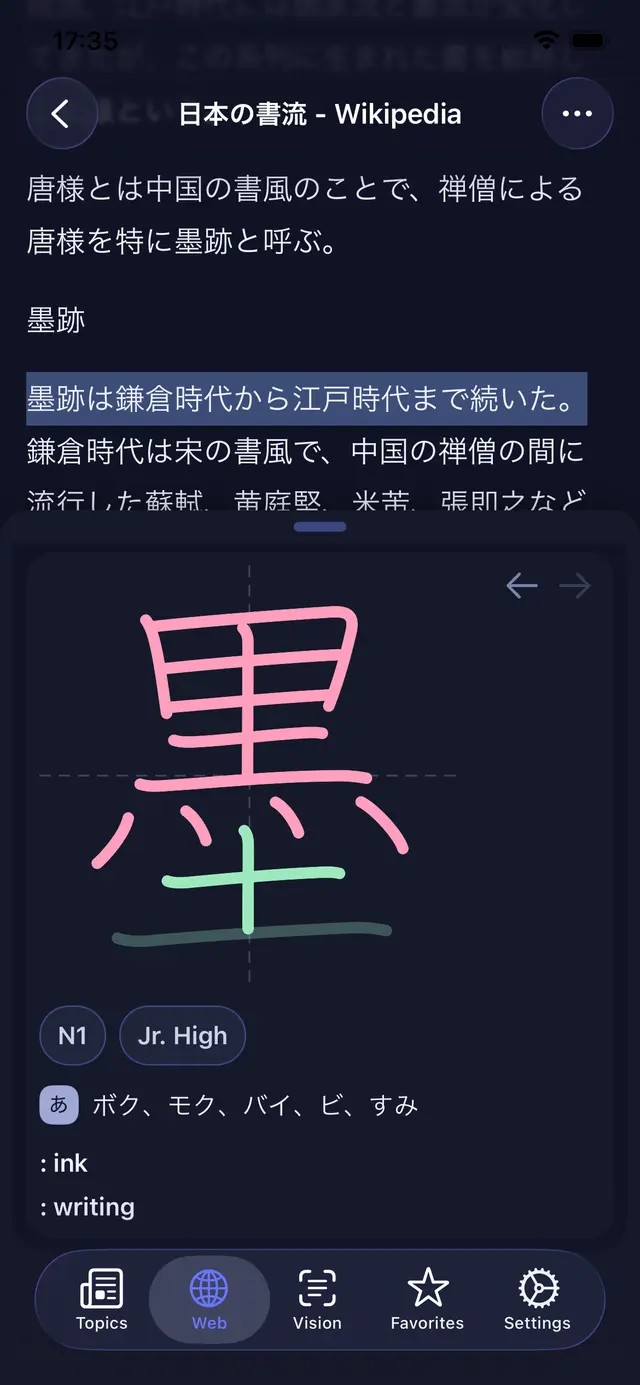
JLPT kanji
Kanji by approximate level for the Japanese Language Proficiency Test, from N5 (easiest) to N1 (hardest).
Doknya expert kanji
Kanji with no assigned JLPT level, grouped by frequency of use and writing complexity.
Kyōiku kanji
Graded kanji lists developed by the Japanese Ministry of Education.
Jinmeiyō kanji
Kanji used in Japanese names
Jinmeiyō variant kanji
Variant forms of jōyō kanji, used in Japanese names
Dictionary, classification, ordering, and stroke-order data are derived from these sources: KANJIDIC2 (CC BY-SA 4.0); Unicode Unihan (Unicode License); KanjiVG (CC BY-SA 3.0); JLPT Resources (CC BY); Kanji Usage Frequency (CC BY 4.0).