Japanese Kanji Dictionary
Search by character, reading, or English meaning.
Results
Showing 16 of 16 results
- 衣イ、エ、ころも、きぬ、-ぎgarment, clothes, dressing
- 衤ころもclothes, clothing radical (no. 145
- 袽ジョ、ニョ、やぶれごろもclothes
- 蛀シュ、きくいむしinsects that eat books, clothes
- 笥ス、シ、け、はこlunch box, clothes chest
- 㡜セツ、セイ、セチragged clothes, left over, remainder, the excess
- 碪チン、きぬたstone slab used for washing clothes, an anvil
- 裋シュ、タン、したぎcotton clothes of a boy servant
- 裎テイ、チョウ、ジョウ、はだかto take off the clothes and expose the body, to carry in the girdle
- 裰タツ、タチ、つくろうto mend clothes
- 褧ケイ、キョウ、ひとえunlined clothes, light overcoat
- 襚スイgrave clothes
- 襛ジョウ、ニュ、ジュウ、あつ.いfine clothes
- 皁ソウ、しもべblack, police runners (from the black clothes formerly worn by them)
- 螙ト、きくいむしgrubs in wood, worms in books, clothes, etc, used figuratively of corrupt officials
- 燙トウ、あたた.めるscald, heat, wash, iron clothes
Kanji sets
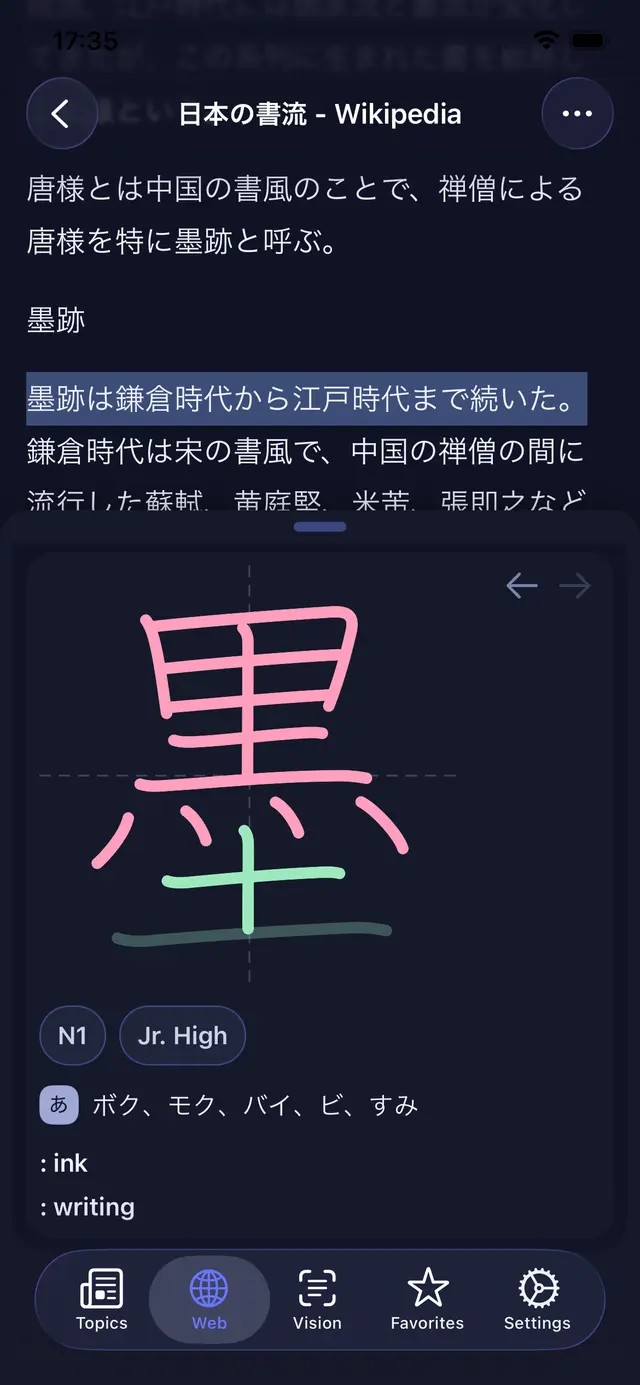
JLPT kanji
Kanji by approximate level for the Japanese Language Proficiency Test, from N5 (easiest) to N1 (hardest).
Doknya expert kanji
Kanji with no assigned JLPT level, grouped by frequency of use and writing complexity.
Kyōiku kanji
Graded kanji lists developed by the Japanese Ministry of Education.
Jinmeiyō kanji
Kanji used in Japanese names
Jinmeiyō variant kanji
Variant forms of jōyō kanji, used in Japanese names
Dictionary, classification, ordering, and stroke-order data are derived from these sources: KANJIDIC2 (CC BY-SA 4.0); Unicode Unihan (Unicode License); KanjiVG (CC BY-SA 3.0); JLPT Resources (CC BY); Kanji Usage Frequency (CC BY 4.0).