Dictionnaire de kanji japonais
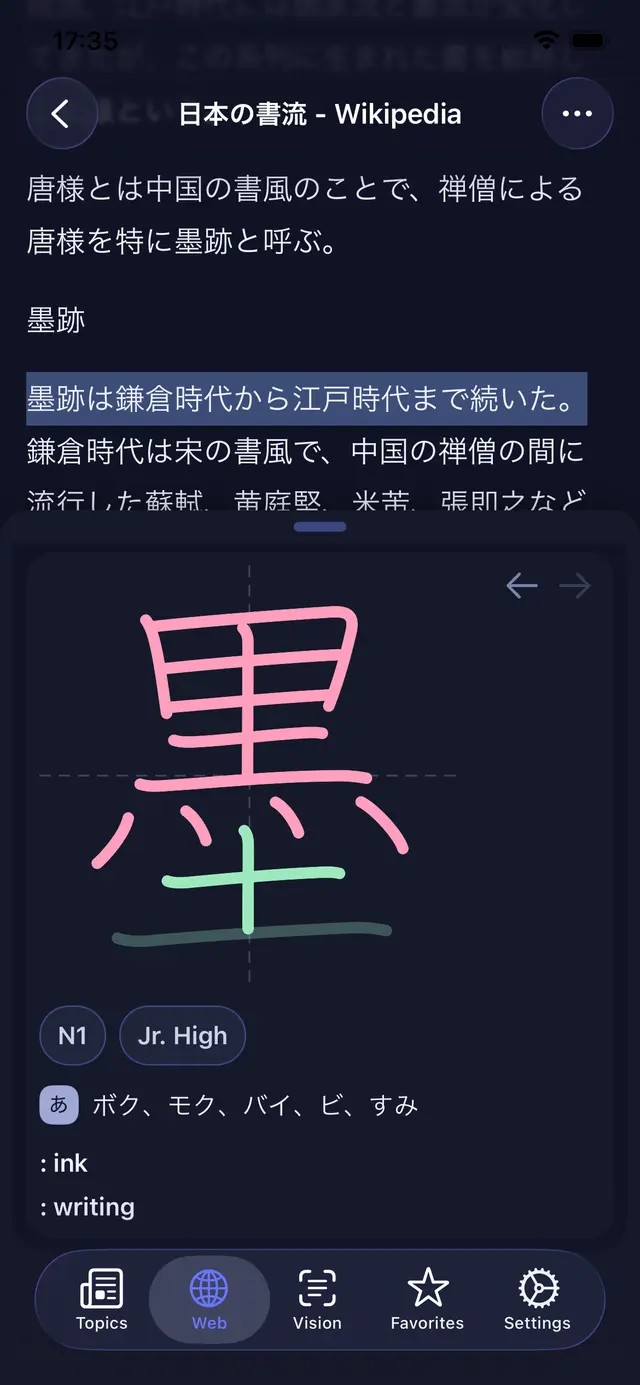
Recherche par caractère, lecture ou signification anglaise.
Résultats
Affichage de 24 sur 33 résultats
- 孰ジュク、いずれ、たれwhich, how, who
- 哪ダ、ナwhich? where? how?
- 潘ハンwater in which rice has been washed
- 郯タンname of a small ancient principality which was situated in what is now part of Shantung and Kiangsu
- 棻フンkind of wood from which perfume is made
- 汜シ、イ、かわstream which leaves the main branch then later returns
- 蒯カイ、ケrush, of which various things are made
- 笮サク、シャク、せま.いboards which support tiles on roof
- 邾チュ、シュfeudal state which existed BC 700-469, now in Shandong
- 芿ジョウ、ニョウgrass which has been cut and re-grown, wild grass
- 鷁ゲキwaterfowl which flies high but not against the wind
- 坫テン、チン、さかいstand on which to replace goblets after drinking
- 檾ケイ、キョウ、いちびgrassy plant with fibres from which cloth is made
- 蘧ク、キョplant which resembles wheat but has no edible grain
- 蟫イン、タン、ドン、しみthe insect, commonly known as the silver-fish, which destroys books, clothing, etc.
- 崦エンmountain in Kansu, where there is a cave into which the sun is said to sink at night
- 弮ケン、いしゆみ、ま.がる、まきcross-bow which discharged several bolts in succession
- 滫シュウ、シュ、とぎじるwater in which rice has been boiled
- 獯クンtribe of Scythians which invaded China during the Hsia dynasty
- 筁キョク、コク、かいこの.すbamboo frame on which silkworms spin their cocoons
- 蝥ボウ、ム、メウ、ブfly which is used similarly to cantharides
- 蟊ボウ、ム、ねきりむしfly which is used similarly to cantharides
- 衈ジ、ニthe blood of a sacrificial fowl which was sprinkled on the doors and vessels
- 衩サイ、シャ、サthe open seam of a garment which allows freedom of movement
Ensembles de kanji
Kanji JLPT
Kanji classés par niveau approximatif pour le Japanese Language Proficiency Test, de N5 (le plus simple) à N1 (le plus difficile).
Kanji expert Doknya
Kanji sans niveau JLPT, groupés par fréquence d’utilisation et complexité d’écriture.
Kanji Kyōiku
Listes de kanji graduées développées par le Ministère japonais de l’Éducation.
Kanji Jinmeiyō
Kanji utilisés dans les noms japonais
Kanji Jinmeiyō variante
Formes variantes des kanji jōyō, utilisées dans les noms japonais
Le dictionnaire, les classements, le classement et les données d’ordre des traits proviennent de ces sources : KANJIDIC2 (CC BY-SA 4.0); Unicode Unihan (Unicode License); KanjiVG (CC BY-SA 3.0); JLPT Resources (CC BY); Kanji Usage Frequency (CC BY 4.0).