Japanese Kanji Dictionary
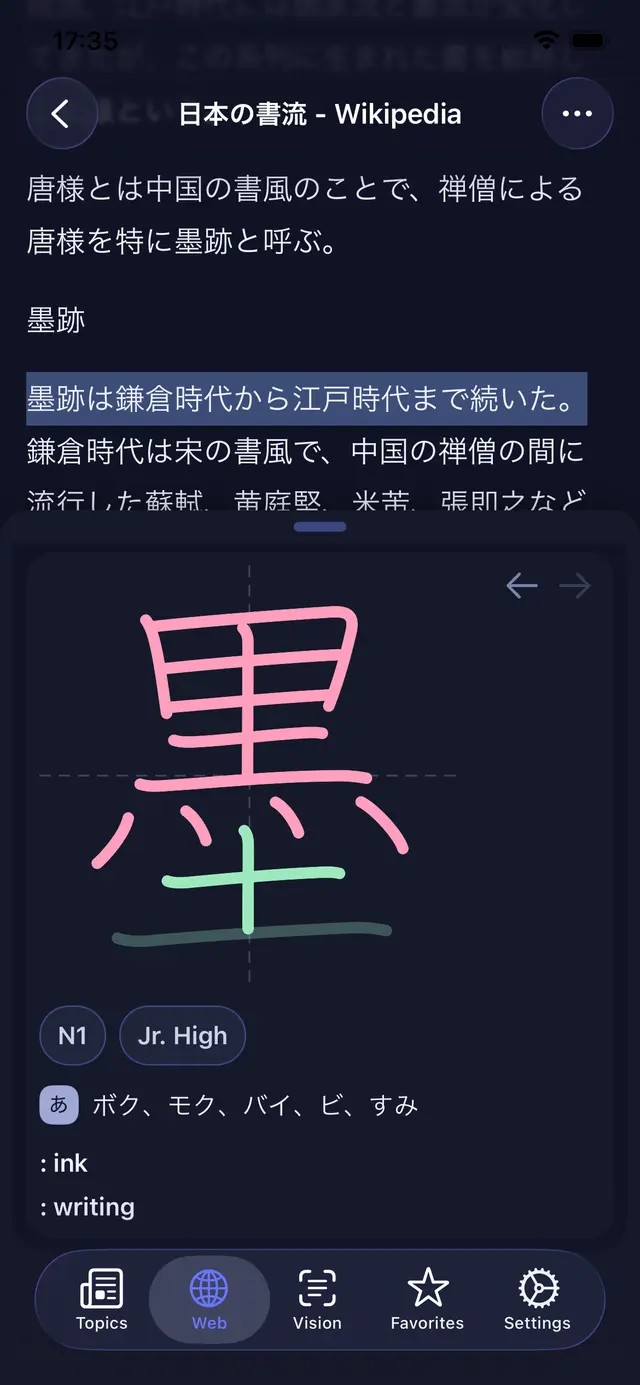
Search by character, reading, or English meaning.
Results
Showing 13 of 13 results
- 滅メツ、ほろ.びる、ほろ.ぶ、ほろ.ぼすdestroy, ruin, overthrow, perish
- 僨フン、ホン、たお.れる、お.ちる、やぶ.るruin, cause fail, overthrown
- 傾ケイ、かたむ.く、かたむ.ける、かたぶ.く、かた.げるlean, incline, tilt, trend
- 址シ、あとruins
- 墟キョ、あとruins
- 塌トウfall in ruins, collapse
- 隤タイ、ズイ、タ、お.ちるto fall in ruins, to collapse
- 躅チョク、タクtap with the feet, ruins
- 覆フク、おお.う、くつがえ.す、くつがえ.るcapsize, cover, shade, mantle
- 圮ヒ、やぶ.る、やぶ.れる、くつが.えす、くつが.えるdestroyed, ruined, to subvert, to injure
- 垝キ、やぶ.れる、だいdilapidated, ruined
- 蔽ヘイ、ヘツ、フツ、おお.う、おお.いcover, shade, mantle, capsize
- 毀キ、こぼ.つ、こわ.す、こぼ.れる、こわ.れるbreak, destroy, censure, be chipped
Kanji sets
JLPT kanji
Kanji by approximate level for the Japanese Language Proficiency Test, from N5 (easiest) to N1 (hardest).
Doknya expert kanji
Kanji with no assigned JLPT level, grouped by frequency of use and writing complexity.
Kyōiku kanji
Graded kanji lists developed by the Japanese Ministry of Education.
Jinmeiyō kanji
Kanji used in Japanese names
Jinmeiyō variant kanji
Variant forms of jōyō kanji, used in Japanese names
Dictionary, classification, ordering, and stroke-order data are derived from these sources: KANJIDIC2 (CC BY-SA 4.0); Unicode Unihan (Unicode License); KanjiVG (CC BY-SA 3.0); JLPT Resources (CC BY); Kanji Usage Frequency (CC BY 4.0).